

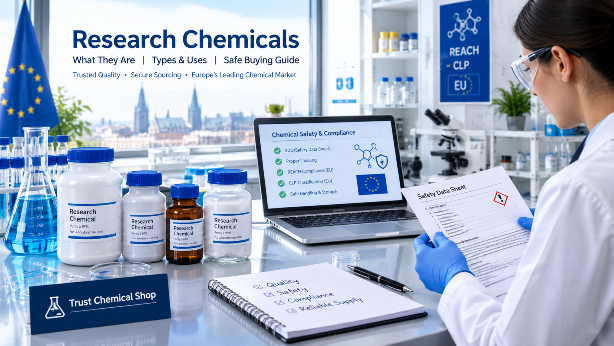
Research chemicals play an important role in modern laboratory research, analytical testing, pharmaceutical development, materials science, and other scientific fields. These substances allow qualified researchers to investigate chemical properties, reactions, mechanisms, and potential applications under controlled laboratory conditions.
However, buying research chemicals requires more than simply finding an online supplier. Researchers and laboratories should consider product identity, purity, documentation, storage requirements, applicable regulations, and supplier reliability before placing an order.
For customers searching for research chemicals in Europe, Trust Chemical Shop offers an online sourcing option for laboratory and research compounds. Buyers should always confirm that the selected chemical is legal to purchase, possess, transport, and use in their jurisdiction.
What Are Research Chemicals?
Research chemicals are chemical substances supplied primarily for scientific investigation, laboratory analysis, testing, or research and development. Depending on the compound, researchers may examine properties such as molecular structure, chemical reactivity, stability, solubility, analytical characteristics, or interactions with other substances.
The term “research chemical” covers a broad range of compounds. It does not automatically mean that a substance is safe, approved for human use, or unrestricted by law.
In the European Union, chemical businesses operate within regulatory frameworks that include REACH and CLP. REACH establishes requirements concerning the registration, evaluation, authorisation, and restriction of chemicals, while CLP addresses classification, labelling, and packaging.
This makes regulatory awareness an important part of responsible chemical sourcing.
Various Types of Research Chemicals
Research chemicals can belong to many different chemical families. Their applications depend on their individual properties and the research project involved.
1. Organic Research Chemicals
Organic compounds contain carbon and form one of the largest groups used in chemical research. Laboratories may study organic compounds for synthesis, analytical chemistry, materials development, pharmaceutical research, and chemical process development.
Researchers may investigate their molecular structures, reactions, purity, stability, and interactions with other compounds.
2. Inorganic Research Chemicals
Inorganic chemicals include substances such as salts, minerals, metals, metal compounds, and other non-organic materials.
They can support research involving catalysis, materials science, electrochemistry, industrial chemistry, and analytical testing.
3. Analytical Research Chemicals
Analytical chemicals help laboratories identify, measure, or characterize substances. Researchers may use reference materials and analytical-grade compounds when developing or validating laboratory methods.
Depending on the application, analytical work can involve techniques such as chromatography, spectroscopy, mass spectrometry, and other instrumental methods.
4. Pharmaceutical Research Compounds
Some research compounds appear in pharmaceutical and drug-development research. Scientists may investigate their chemical characteristics, biological interactions, metabolism, or potential therapeutic applications.
These materials require particular care because some compounds may be regulated or unsuitable for human or animal use.
5. Material Science Research Chemicals
Materials research uses specialized chemicals to develop and evaluate polymers, coatings, catalysts, electronic materials, nanomaterials, and other advanced products.
Researchers can use chemical compounds to examine properties such as conductivity, durability, thermal stability, surface characteristics, and chemical resistance.
6. Specialty and Reference Compounds
Specialty compounds may serve specific analytical or experimental purposes. Reference standards can help laboratories compare analytical results and establish reliable testing procedures.
The correct compound, concentration, purity level, and documentation are important when selecting a reference material.
What Are Research Chemicals Used For?
Research chemicals have applications across numerous scientific and industrial fields. Common areas include:
- Chemical synthesis and reaction studies
- Analytical and quality-control testing
- Pharmaceutical research and development
- Materials and polymer research
- Academic laboratory research
- Environmental analysis
- Industrial process research
- Method development and validation
- Instrument calibration and analytical comparison
The exact application depends on the chemical and its documented intended use. Researchers should consult the supplier’s technical documentation and applicable safety information before handling any compound.
How to Choose a Safe Research Chemical Supplier
Choosing a supplier should involve more than comparing prices. A professional supplier should provide clear product information and appropriate safety documentation.
Check Product Identification
Look for the correct chemical name, CAS number where applicable, molecular information, concentration, quantity, and purity specification. Accurate identification helps prevent ordering the wrong compound.
Review Safety Documentation
A Safety Data Sheet (SDS) provides important information about chemical hazards, handling, storage, exposure controls, transport, disposal, and emergency procedures. ECHA identifies SDS information as an important part of communicating chemical safety through the supply chain.
Consider Regulatory Status
Before purchasing, verify whether the substance is restricted, controlled, authorised, or subject to other requirements in your country. EU chemical restrictions can limit or prohibit the manufacture, placing on the market, or use of particular substances.
Look for Quality Information
A reliable supplier should be able to provide appropriate information about product specifications and quality controls. Depending on the product, documentation may include certificates of analysis, batch information, purity data, or other technical records.
Evaluate Packaging and Labelling
Chemical packaging should protect the material during storage and transport. Proper labels should identify the contents and communicate relevant hazards where required.
ECHA notes that distributors have responsibilities regarding safety communication and, for hazardous substances and mixtures, the provision of appropriate safety data sheets, labelling, and packaging.
Where Can You Buy Research Chemicals Safely?
Researchers can source chemicals through established laboratory suppliers, specialist chemical distributors, manufacturers, and reputable online chemical stores.
When purchasing online, avoid suppliers that provide little information about chemical identity, safety documentation, or regulatory status. A professional website should make it reasonably clear what the product is, what documentation is available, and what restrictions may apply.
For European buyers, checking chemical information through the European Chemicals Agency (ECHA) can also provide useful regulatory context. ECHA maintains databases containing information about chemicals and regulatory processes.
Buying Research Chemicals From Trust Chemical Shop
Trust Chemical Shop offers an online platform for customers looking to source research and laboratory chemicals. The company presents itself as serving customers in the European chemical market.
When considering an order, customers should first identify the exact compound required for their legitimate research application and confirm its legal status in the destination country.
A responsible purchasing process can include:
- Identify the required compound and verify its chemical name and CAS number.
- Review product specifications such as purity, quantity, concentration, and available documentation.
- Check the applicable regulations in the destination country.
- Review the SDS and safety information before purchasing or handling the chemical.
- Confirm appropriate storage and transport requirements.
- Use accurate delivery and billing information required for a lawful transaction.
- Follow all applicable customs, import, laboratory, and chemical-safety requirements.
- Can Research Chemicals Be Shipped Discreetly?
Privacy-conscious packaging can be important for legitimate businesses and laboratories. However, “discreet” shipping should not mean hiding a regulated chemical from customs, carriers, authorities, or safety requirements.
A safer approach is professional, privacy-conscious packaging that remains compliant with applicable labelling, transport, customs, and documentation rules. Customers should never ask a supplier to misdeclare a chemical, falsify paperwork, conceal regulated substances, or bypass import controls.
The exact shipping requirements can vary according to the chemical, destination, quantity, carrier, and national regulations.
Why Documentation Matters
Good documentation supports safer purchasing and laboratory work. It helps researchers understand the chemical they are ordering and identify appropriate handling measures.
For hazardous substances, the SDS can provide information covering hazards, first aid, firefighting, exposure controls, storage, disposal, and transport.
This information should remain accessible to laboratory personnel who work with the material.
Final Thoughts
Research chemicals support a wide range of scientific and industrial activities, from analytical testing and chemical synthesis to pharmaceutical and materials research. Because different compounds have different hazards and regulatory requirements, responsible sourcing should always begin with accurate product identification, safety documentation, supplier verification, and legal compliance.
For customers looking for research chemicals online in Europe, TrustChemicalShop.com can be considered an online sourcing option. Before placing an order, always verify the product’s legal status, intended research use, documentation, and delivery requirements in your country.
A professional approach to chemical purchasing is not simply about finding a product online. It is about choosing the correct compound, understanding its risks, verifying its documentation, and ensuring that every stage of the purchase and use follows applicable laws and laboratory safety practices.