

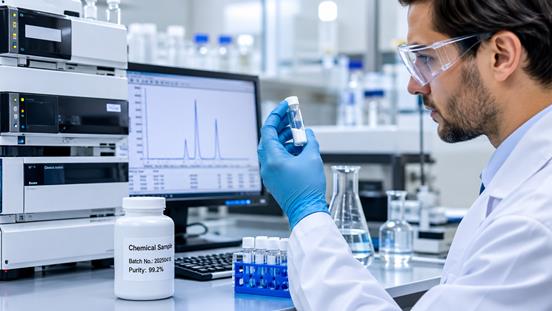
When a chemical product is described as 99% pure, an important question follows: how was that percentage established, which analytical method was used, and does the result relate to the exact batch being evaluated? Understanding how to verify compound purity requires more than looking at a product description. It involves analytical evidence, appropriate testing methods, accurate documentation, and professional laboratory procedures.
For research institutions, analytical laboratories, and chemical quality-control professionals, purity is an important factor. It can influence experimental reproducibility, analytical results, material stability, and the reliability of scientific conclusions. A sample may appear clean while still containing impurities that cannot be identified through visual inspection alone.
How to Verify Compound Purity Starts With Documentation
One of the first steps in chemical quality assessment is reviewing the available documentation. A Certificate of Analysis (COA) provides information about a material’s tested characteristics and the analytical methods used to evaluate it.
A comprehensive COA should identify the chemical, provide relevant batch information, indicate the testing date, and present the analytical results. It should also identify the testing laboratory and explain the methods used.
Batch identification is particularly important because analytical results apply to the material that was actually tested. Results from an earlier batch should not automatically be assumed to represent a newer production batch.
Documentation should also explain what the reported purity percentage represents. Different analytical methods measure different chemical properties, and chromatographic area percentages are not necessarily equivalent to absolute mass purity.
Which Analytical Methods Are Used to Assess Chemical Purity?
There is no single analytical technique that answers every purity question. The appropriate method depends on the chemical’s properties, expected impurities, and the purpose of the analysis.
Several established techniques are used in professional laboratories.
High-Performance Liquid Chromatography (HPLC)
HPLC is widely used in chemical analysis to separate components within a sample. It can help laboratories evaluate the presence of related compounds and identify potential impurities.
The technique is particularly useful for substances that are not suitable for conventional gas chromatography.
However, chromatographic results depend on the analytical method and detector response. HPLC findings should therefore be interpreted alongside other relevant analytical information.
Gas Chromatography-Mass Spectrometry (GC-MS)
GC-MS combines separation through gas chromatography with mass spectrometry for chemical identification.
It is commonly used when evaluating volatile and semi-volatile compounds. The resulting analytical information can help distinguish different chemical components and support compound identification.
Not every chemical is suitable for direct GC-MS analysis, particularly materials that are thermally unstable or insufficiently volatile.
Nuclear Magnetic Resonance (NMR)
NMR spectroscopy provides structural information about chemical compounds.
It can help confirm molecular identity and identify certain impurities that might not be adequately represented by other analytical techniques.
NMR is particularly valuable when laboratories need additional structural evidence rather than relying exclusively on a single purity percentage.
Fourier-Transform Infrared Spectroscopy (FTIR)
FTIR spectroscopy examines how chemical substances interact with infrared radiation.
It produces characteristic spectral information that can help identify functional groups and support chemical identification.
FTIR is useful in many laboratory quality-control environments, although it should not automatically be treated as a complete quantitative purity assessment.
Understanding Analytical Results
A purity percentage should never be interpreted without understanding the method behind it.
Different analytical techniques have different capabilities and limitations. A result obtained through one method may not capture every possible impurity present in a sample.
Laboratory professionals therefore consider several factors when reviewing analytical information:
- Method suitability: Whether the selected analytical technique is appropriate for the chemical being examined.
- Analytical specificity: Whether the method can distinguish the target compound from related substances.
- Measurement uncertainty: How much uncertainty is associated with the reported result.
- Reference standards: Whether appropriate reference materials were used.
- Documentation: Whether the results are supported by traceable laboratory records.
These considerations help prevent misleading interpretations and improve the reliability of chemical quality assessments.
Why Batch Consistency Matters
Chemical quality is not determined by a single analytical result. Consistency between batches is another important consideration in professional quality management.
Two batches of the same chemical may produce different analytical results because of variations in manufacturing, storage, handling, or environmental exposure.
This is why laboratory quality systems emphasize batch identification, documentation, testing records, and traceability.
For organizations working with chemical materials, maintaining accurate records makes it easier to investigate unexpected analytical results and identify potential quality issues.
Common Warning Signs in Chemical Quality Documentation
Not all analytical documents provide sufficient evidence to support a purity claim.
Several documentation problems deserve attention:
Missing analytical methods: A purity percentage without an explanation of the testing method provides limited information.
Unidentified batches: Documentation without a batch or lot reference makes traceability difficult.
Undated results: Analytical results should include relevant testing dates.
Unclear laboratory information: Reports should identify the laboratory responsible for the analysis.
Unsupported purity claims: Extremely precise purity figures should be supported by appropriate analytical evidence.
Professional chemical quality management depends on transparent documentation rather than unsupported statements.
How Storage and Handling Affect Chemical Purity
Chemical purity can change after production because of environmental exposure and material degradation.
Temperature, humidity, light, oxygen, and incompatible storage conditions can influence the stability of certain chemicals.
Some materials are particularly sensitive to moisture or prolonged exposure to environmental conditions. Others may undergo oxidation or other chemical changes during storage.
Proper storage procedures should therefore be based on the chemical’s documented properties and applicable safety information.
Packaging also plays an important role. Appropriate containers, accurate labeling, and suitable environmental controls help maintain material integrity throughout storage and laboratory handling.
The Importance of Independent Laboratory Testing
Independent analytical testing can provide additional confidence in chemical characterization.
Accredited laboratories operate under established quality systems and use documented analytical procedures. Depending on the material and testing requirements, independent analysis may provide useful confirmation of identity, purity, and selected impurity characteristics.
For scientific and industrial applications, independent verification is particularly valuable when analytical accuracy is essential.
Laboratories should also consider whether the selected testing facility has appropriate technical competence and experience with the analytical methods involved.
How to Verify Compound Purity Through Quality Control
An effective quality-control system combines documentation, appropriate analytical methods, traceability, and professional laboratory oversight.
The process begins with identifying the material and understanding its expected chemical characteristics. Relevant documentation is then reviewed to establish what testing has been performed and what the reported results actually demonstrate.
Analytical findings should be evaluated within the limitations of the selected methods. Where necessary, additional testing can provide information that a single analytical technique cannot establish.
This approach helps laboratories maintain consistent standards without relying on unsupported purity claims.
For Trust Chemical Shop, providing clear educational information about chemical identification, analytical testing, and laboratory quality standards is an important part of promoting responsible scientific understanding.
What to Look for in a Reliable Chemical Quality System
A professional chemical quality system should prioritize transparency and traceability.
Important elements include:
- Clearly identified chemical materials.
- Appropriate analytical testing methods.
- Documented quality-control procedures.
- Batch-specific records.
- Accurate storage and handling information.
- Relevant safety documentation.
- Transparent reporting of analytical limitations.
These elements contribute to better quality management and help laboratories make informed decisions about the materials they evaluate.
Conclusion
Understanding how to verify compound purity requires more than accepting a percentage printed on a product label. Reliable chemical assessment depends on appropriate analytical methods, accurate documentation, batch traceability, and professional quality-control procedures.
Techniques such as HPLC, GC-MS, NMR, and FTIR provide different forms of analytical information, each with specific strengths and limitations.
For laboratories and scientific organizations, the most effective approach is to evaluate purity claims using appropriate evidence rather than relying on marketing language. Trust Chemical Shop recognizes the importance of accurate chemical information, analytical transparency, and responsible laboratory practices in the wider research chemical industry.