

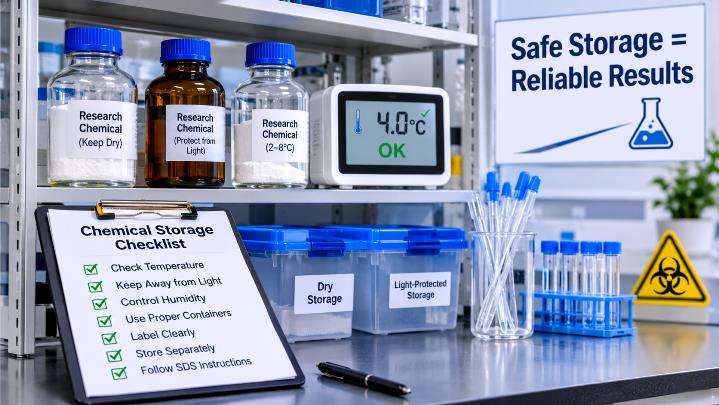
How to Store Research Chemicals Properly: A Practical Guide to Safe Storage
Research chemicals require more than careful purchasing and quality checks. How to store research chemicals after delivery also matters. Exposure to unsuitable temperatures, moisture, light, and air can affect chemical stability and compromise the integrity of laboratory materials.
Understanding how to store research chemicals properly helps laboratories maintain better inventory control, reduce unnecessary contamination risks, and protect the quality of their materials. However, there is no universal storage method for every compound. Different chemical substances have different stability requirements, and the correct approach depends on their properties and manufacturer instructions.
We believe responsible chemical handling starts with understanding the materials you work with. This guide explains the essential storage principles every research professional should understand.
1. Understand the Storage Requirements of Each Compound
Before storing any research chemical, identify its specific storage requirements. Never assume that two compounds with similar appearances or physical forms need identical conditions.
Some materials remain stable under controlled room-temperature conditions, while others require additional environmental protection. Certain substances may also react with moisture, oxygen, or incompatible materials.
Start by checking the manufacturer’s documentation and Safety Data Sheet (SDS). These documents provide important information about:
- Recommended storage temperatures.
- Light and moisture sensitivity.
- Chemical incompatibilities.
- Required protective measures.
- Shelf-life and stability information.
Following these instructions gives you a much better starting point than applying general storage practices to every product.
2. Control Temperature and Environmental Conditions
Temperature fluctuations can affect chemical stability. Excessive heat may accelerate certain degradation processes, while unsuitable cooling conditions can create other problems.
Choose a storage environment based on the compound’s documented requirements. If a material requires refrigeration, use an appropriate temperature-controlled laboratory unit with a monitoring system.
Avoid storing chemicals near radiators, direct sunlight, windows, or equipment that produces excessive heat.
Remember that refrigeration and freezing are not interchangeable storage methods. Some materials can become unstable under freezing conditions, so always follow the manufacturer’s recommendations.
3. Protect Chemicals from Moisture and Light
Humidity and light exposure can gradually affect sensitive research materials.
Moisture presents a particular challenge for hygroscopic compounds, which absorb water from their surrounding environment. This absorption can change their physical properties and affect their stability.
To manage these risks:
- Keep containers properly sealed.
- Use suitable storage cabinets.
- Protect light-sensitive materials from direct exposure.
- Maintain appropriate humidity conditions.
- Follow manufacturer recommendations for moisture protection.
Dark storage cabinets and compatible light-resistant packaging can provide additional protection where required.
4. Choose Appropriate Chemical Storage Containers
Packaging plays an important role in maintaining chemical integrity. The wrong container can introduce contamination, allow moisture penetration, or react with the stored material.
Whenever possible, retain chemicals in their original manufacturer-approved packaging.
If laboratory procedures require transferring materials, select containers specifically designed for chemical compatibility. Consider the chemical’s properties, packaging material, closure system, and storage environment before making changes.
Never use ordinary food containers, unverified plastic bottles, or unsuitable household packaging for laboratory chemicals.
Proper container selection helps maintain material integrity and reduces unnecessary handling risks.
5. Label Every Container Clearly
Accurate labelling makes chemical storage safer and inventory management easier.
Every container should have enough information to identify its contents without relying on appearance or guesswork.
Important labelling details include:
- Chemical name and identification.
- Concentration, where applicable.
- Batch or lot number.
- Date received.
- Relevant hazard information.
- Required storage conditions.
- Appropriate expiration or retest information.
Never remove or cover important manufacturer labels. If information becomes damaged or unreadable, resolve the identification issue before using or handling the material.
A consistent labelling system also helps laboratory teams identify incompatible substances and maintain accurate inventory records.
6. Separate Incompatible Chemicals
One common storage mistake involves placing different chemicals together without considering their compatibility.
Certain substances can react dangerously when they come into contact with one another. These reactions may produce heat, release hazardous gases, or create other serious safety risks.
Organize laboratory storage according to chemical compatibility rather than simply arranging products alphabetically.
Use appropriate segregation systems for incompatible materials, and consult SDS documentation when deciding where individual compounds belong.
Also maintain suitable separation between chemicals and food, drinks, personal belongings, and general household materials.
7. Maintain Good Handling and Inventory Practices
Even a well-organized storage facility cannot compensate for poor handling procedures.
Every time laboratory personnel access a chemical container, they introduce opportunities for contamination, spills, and identification errors.
Establish clear handling procedures and ensure that trained personnel follow them consistently.
Good practices include:
- Using appropriate personal protective equipment.
- Following laboratory handling procedures.
- Keeping work areas clean and organized.
- Closing containers immediately after use.
- Recording inventory movements.
- Inspecting packaging for damage or leakage.
Regular inventory inspections also help identify expired materials, damaged containers, and products that require additional attention.
Never return unused chemicals to their original containers unless an approved procedure specifically allows it. This prevents accidental contamination of the remaining material.
8. Why Proper Chemical Storage Matters
Proper storage is not simply about keeping laboratory shelves organized. It supports several important aspects of responsible research operations.
Chemical integrity: Suitable storage conditions help reduce unwanted changes to sensitive materials.
Laboratory safety: Proper segregation, labelling, and containment reduce avoidable handling risks.
Inventory management: Accurate records make it easier to monitor stock and identify materials requiring attention.
Waste reduction: Good storage practices help prevent unnecessary losses caused by damaged packaging or unsuitable environmental conditions.
Research consistency: Maintaining appropriate material conditions supports more reliable laboratory procedures.
These benefits make storage management an essential part of responsible laboratory operations.
Final Thoughts: Make Chemical Storage Part of Your Laboratory Routine
How to store research chemicals correctly requires attention to detail, suitable facilities, and consistent handling procedures. Temperature control, moisture protection, compatible packaging, accurate labelling, and chemical segregation all contribute to a safer and more organized laboratory environment.
Rather than treating storage as an afterthought, make it part of your laboratory’s standard operating procedures. Always consult the relevant Safety Data Sheet, follow manufacturer instructions, and ensure that trained personnel handle and manage chemical inventory appropriately.
We recognize the importance of informed chemical handling and responsible research practices. Understanding how to manage laboratory materials properly is an important step towards maintaining a more controlled and professional research environment.